WORKSHOPS
Workshops will be announced continuously as attendee applications are reviewed and approved.
Engaging Mind and Body in Practice
At the heart of Body Psychotherapy lies the principle of actively engaging both the body and the mind—a philosophy we wholeheartedly embrace. True to this core value, a significant part of the festival program is devoted to 90-minute experiential workshops, conducted by fellow attendees. These hands-on sessions allow us to practice what we preach (if anything), fostering a rich environment for learning and sharing expertise.
Want to Lead a Workshop?
1. Submit Your Proposal:
After purchasing your Festival Pass, you’ll receive an email confirmation. Use the payment order as Ticket Number to submit your workshop application.
2. Review Process:
The Festival Content Committee will review all submissions. Priority is given to experiential workshops.
3. Confirmation:
Approved workshops will be added to the festival program, and you’ll be notified of the next steps.
The deadline for submitting workshop proposals was until July 31st. Some applications are still being reviewed by the content committee. If you have any questions, please reach out via email.
“Listen! - Your Body Has Something To Tell You”
Iva Hristova, bulgaria
Iva Hristova is a licensed psychologist specializing in women's emotional well-being, particularly during the transition to motherhood. With a BA in Psychology from DePaul University, Chicago and ongoing studies in body psychotherapy, she integrates talk therapy with movement, dance, mindfulness, and embodiment. Iva leads workshops and retreats on self-love, feminine energy, conscious parenting, and emotional intelligence. As founder of AmalaJewelry, she designs gemstone pieces to support emotional healing. Her work centers on helping people reconnect with their authentic selves through body wisdom, emotional presence, and compassionate transformation.
friday, September 5th | 11:00 AM
Session 1 | room "SUNDARI"
“Integrative and Body Movement Therapy”
Martin J. Waibel, germany
Martin J. Waibel is a teaching therapist for Integrative Body and Movement Therapy, Integrative Therapy, Master of Science (Psychotherapy), Dipl. Supervisor (University of Amsterdam) and Dipl. Social Worker (HS RV/Wgt). He worked for 41 years at a specialist clinic for psychotherapy and psychosomatics, where he worked with numerous patients suffering from chronic pain of various origins. He now teaches at medical colleges and universities. He works in his own practice and gives seminars on body and physical psychotherapy throughout Europe. Many publications, including Körperpsychotherapie bei chronischen Schmerzen, Schattauer 2023
friday, September 5th | 11:00 aM
Session 1 | room "GITA VIDYA"
In order to do justice to our patients with chronic pain disorders, it is important to start from an interplay of biological, psychological, social and ecological factors. The subjective experience of life and suffering (context) in the development of our patients’ lifespan is explored phenomenologically (continuum) on the body. From the perspective of an integrative view of the body, pain is a trans-material emergence of the organism. By this we mean that material neurophysiological processes allow biochemical and transmaterial information to emerge in the form of motor, emotional, iconic or linguistic schemata or narratives. In other words, pain is a phenomenon that is partially measurable and visible, especially in the case of organically caused pain such as a nerve lesion (biologistic view), but just as difficult to grasp and objectify as, for example, in the case of emotional and social causes of pain. Chronic pain is seen as a specific form of experience, suffering and expression of the body that manifests itself in different phenomena. In this workshop you will get to know the methodology of Integrative Body and Movement Therapy (IBT) in order to perceive, grasp and understand the phenomena of the painful body of our patients and to alleviate them in appropriate therapeutically effective interventions.
“Touch in Functional Analysis: Theory and Body Practice”
gloria quattrini, italy
Gloria Quattrini, a Psychologist and (CTA)-EATA certified Transactional Analyst, specializes in Functional Analysis, training with Will Davis at Aetos (Mestre/Venice) and the Institute of Functional Analysis (La Spezia). She runs a private practice in Modena and teaches Bio-psycho-social counseling in Legnano (Milan). She collaborates with the Institute of Functional Analysis as a professor in introductory workshops.
For over a decade, she has led experiential workshops on affectivity. She has published in Disability and Social Network (Franco Angeli, 2006). Since 2022, she has lectured at the II and III International Forum of Functional Analysis. In 2023, she presented workshops at the EABP Congress (Sofia) and AIPC Congress (Rome) on Functional Analysis, early disorders, and the instroke process.
friday, September 5th | 11:00 aM
Session 1 | room "GAYATRI" [TRIPURA 1]
In 1984 W. Davis, inspired by W. Reich theories on energy, Lawrence Jones work on “Positional Release”, Ida Rolf’s theory on connective tissues, Charles Kelley’s Radix work on the body, and by Fritz Perls Gestalt therapy, begins to develop a working method called Functional Analysis, which is a combination of delicate touch and verbal work aimed at re-establishing the spontaneous energetic coordination of the organism (Davis 2012). One of the peculiarities of FA compared to other body therapies, is that the technique used, “P. & P./Points and Positions” is oriented towards the connective tissue as, according to Davis, it structures and maintains the defensive system (Davis 2018).
Functional Analysis was born as a method of self-regeneration of the organism. This approach directly treats the connective tissue through “points and positions”, a specific set of delicate touch which favors the instroke process (relaxation phase) where a gradual contact with the Self occurs and, consequently, a restructuring phase of the person also takes place.
Touch is characterized by certain elements such as pressure, rhythm and pause, each of them with therapeutic value. Touch is a “con-tact” with the person beneath his character defenses, thus facilitating the instroke process.
In this phase, according to Davis, nothing happens, but everything happens.
The workshop will focus on a theoretical part where the key principles of Functional Analysis and the function of touch will be briefly illustrated, followed by an experiential part where participants will try the body treatment by experiencing the basic technique of “Points and Positions Massage”.
“ The Sound in neuroscience and bioenergetics: pathways to authenticity, love and deep healing"
ada lentini, italy
Ada Lentini is a Medical Doctor specializing in General Surgery and a Certified Bioenergetic Therapist (CBT) trained at the Italian School of Bioenergetic Analysis (SIAB) in Rome, Italy. She teaches Emotional Anatomy in SIAB’s training programs, with a focus on the integration of neuroscience and the validation of the Bioenergetic model. Ada serves as President of the Italian Society of Bioenergetic Movement & Listening (SIMBA) and is an active member of the European Association for Body Psychotherapy (EABP), where she is part of the Forum Executive Committee.
friday, September 5th | 11:00 aM
Session 1 | room "SHANTI DEVI"
The purpose of the author in the present workshop is to use Bioenergetic Techniques (A.Lowen) in a dialogue with affective neuroscience : from Basic Cerebral Emotional Systems (J. Panksepp) to Polyvagal Theory (S.Porges). On this regard music is used as a tool for the modulation of psychophysiological processes of ANS.
The workshop is divided into two sections: at first a theoretical exposition of what Bioenergetics and Polyvagal theory are is provided and then an experiential part follows. The experience consists in an energetic activation while listening to musical stimuli that are given at specific frequencies. The aimed to the modulation of ANS while adopting specific Bioenergetic Techniques.
The author observes the effect of such techniques and how they modulate the emotional physiological state and the implicit and explicit perception.
Attention is placed on how the body has a role in the emotional regulation in the ventrovagal components when exposed to instrumental music stimuli, to singing, vocal tone, emerging gesture and movement, mimic facial expressions, touch and imagination. Bottom up vision will provide a creative atmosphere of sharing and exchange.
"Somatic Resonance: Entering the Intersubjective Field "
Robert Harper, united kingdom
Robert Harper is a Body Psychotherapist, documentary filmmaker, and martial artist.
He completed a six-year training in Integrative Body Psychotherapy at the Cambridge Body Psychotherapy Centre (UK) and now works in private practice. Robert draws on a wide range of influences—from relational psychoanalysis to shamanic traditions—to support clients in addressing their inner conflicts at a core, existential level, integrating mind, body, heart, and soul.
Creativity, aliveness, presence, and curiosity are the threads that unite his work, as he seeks to understand the deeper currents shaping the surface waters of daily life.
friday, September 5th | 11:00 aM
Session 1 | room "NARYANI" [TRIPURA 3]
Via Somatic Resonance the therapist uses their whole being as a ‘tuning fork’ to receive and resonate with unconscious, unowned or split-off parts of the client’s inner world. It’s a powerful form of body-based empathic listening that requires a deep sensitivity, receptiveness and capacity for attunement. It can also bring with it many challenges and questions.
How do we sort out what’s ‘ours’ and what’s ‘theirs’? How do we open ourselves up to be touched by our client’s innermost experiences, while maintaining healthy self-boundaries and proper self care? How do we resource ourselves when encountering potentially overwhelming fragments of client experience? And how do we ‘offer back’ what we are picking up in ways that are digestible for the client?
In this experiential workshop we will come together to explore what it means to tune in deeply to ourselves as a means to tuning in to the other – making embodied explorations individually, in pairs and as a group.
We will also explore and discuss how to translate the information we receive into therapeutically useful interventions, and briefly clarify distinctions between different forms of non-verbal communication in therapy, such as transference, countertransference, projective identification and somatic resonance.
“Playback Theater: The Body, The Mind and In Between”
JEANNETTE Eichner, GERMANY
With a Master of Arts, Jeannette Eichner has dedicated her career to trauma-focused therapy and holistic healing. She has worked in various clinics, gaining extensive experience and refining her approach to integrate creative tools such as art therapy, theater therapy, and body psychotherapy. Over the years, her methods have evolved to effectively support individuals in processing trauma and building resilience. Passionate about empowering others, Jeannette utilizes diverse techniques to help clients heal, grow, and explore transformative possibilities for personal development.
friday, September 5th | 2:30 PM
Session 2 | room "GITA VIDYA"
This workshop invites participants to explore the deep connection between body and mind through creative storytelling and performance. Rooted in the fundamentals of Playback Theater, it emphasizes physical expression and mindfulness, helping participants strengthen the link between inner experiences and outward expression. The session begins with a warm welcome and an introduction to the practice, setting the stage for an open and supportive space. A guided mindfulness exercise encourages participants to tune into their bodies, fostering presence and spontaneity. Through movement-based warm-ups, they will awaken physical awareness and creative expression. As they experiment with key Playback techniques such as “Fluid Sculptures” and “Pairs,” participants will use movement and sound to bring emotions and personal narratives to life. As stories are shared, others will enact them in a playful and expressive way, offering fresh perspectives and deepening empathy. The session concludes with reflection and a shared creative movement, leaving participants inspired and connected through the power of embodied storytelling.
“Moving Between Knowing and Wonder with Developmental Somatic Psychotherapy (DSP) ”
JENNIFER BURY, USA
Jennifer Bury BFA is a Certified Developmental Somatic Psychotherapy (DSP) Teacher and Supervisor for The Center for Somatic Studies. She is also adjunct faculty at the Gestalt Institute of Cleveland, and a somatic therapist with 40+ years of experience in private practice, leading group trainings and facilitating study groups. She works online and in person, in the U.S. and internationally. In addition to her Gestalt training, her background includes a BFA in Dance from NYU, performing with her own dance company, as well as studies in pre-med, neurology, kinesiology, dance, martial arts, and numerous somatic methods. For more see: www.jenniferbury.com
friday, September 5th | 2:30 PM
Session 2 | room "MAITRI BHAVA"
We all originally enter and orient to the world through movement. We wondered our way forward into the world, and formed our responses, and our way of being, along the way. Over time our curiosity may diminish and we may learn to reach for what is familiar in order to feel safe and certain. Through movement-based, relational explorations we will stimulate our kinesthetic attentiveness to the qualities which define the emerging experience of contacting. Instead of making meanings or interpreting, we will allow ourselves to encounter our sensory and movement responses as a way of coming to know the situation we’re living. In this way, hidden layers of the experience are revealed – we come to know what we feel though we might not be able to explain how or why it happens. Fortifying our courage for discovery, over the familiarity of assumption, is a therapeutic resource for somatic practitioners, coaches, and psychotherapists which requires the ability to discern how to act in relation to the unfolding situation. This workshop provides the territory to move beyond what we have imagined into the novelty of the co-created, wondering moment. Returning to this shared way of learning shifts us from feelings of isolation and fear, to belonging and curiosity for that which we do not yet know.
“Body-Mind Integration as a Healing Process Towards Themselves, The Others, The World”
luciano sabella, italy
Luciano Sabella, Functional psychologist-psychotherapist, carries out clinical activities at his studio in Florence, Italy. Member of the Sif since 1997, trainer and supervisor at the School of Functional Psychotherapy since 2003. EABP Board Member, member of AIPC. Author of clinical and epistemological publications. Creator and conductor of training and prevention projects. Speaker and conductor of numerous speeches and workshops at international meetings, including the EABP congresses of 2014, 2016, 2018, 2021 and 2023.
friday, September 5th | 2:30 PM
Session 2 | Room "VIDYANANDA"
A cohesive Self is the result of a full and harmonious integration of body and mind. Such integration is that which enables, among other things, a feeling and perceiving correctly of both self and others, without one’s own bias.
Deep contact with these capacities of ours, leads us in turn to feel and recognize at all psycho-body levels the real and deep (not induced) needs of each of us. Thus intimate connection with ourselves and others allows us to grasp our wounds, even the deepest ones, because we “feel” them and can approach them without more judgment or criticism. This is the way we can initiate the healing process that will lead us to experience full and deep psycho-body well-being.
After a brief introduction, through some techniques of Functional Psychology the workshop will lead participants to directly feel the connection with their own and others’ needs and the consequent possibility of directly intervening on them, in order to return to experiencing full body-mind well-being.
“Ecstasy and Grounding – When Heaven and Earth Kiss Each Other”
Frithjof Paulig, germany
Frithjof Paulig, born in 1967, studied educational science with a focus on sociology and psychology, earning the title of Diplom-Pädagoge. He later trained as an alternative practitioner for psychotherapy and became a certified body psychotherapist (DGK/EABP). His education includes training in Orgodynamics and transsystemics (Plesse/St. Clair), resonance NLP, systemic organizational development, and spirit and leadership at the Lassalle Institute. Additionally, he has experience with Zen, yoga, and shamanic ritual work, which inform his approach. He manages Orgoville – the Institute for Orgodynamics – where he works as a trainer in Orgodynamics, practices as an Orgodynamics therapist, and provides coaching and qualification for executives. His work focuses on the application of Orgodynamics in both therapeutic and organizational contexts.

friday, September 5th | 2:30 PM
Session 2 | room "MAHAVIRA"
This workshop offers an experiential journey that follows the orgodynamic approach. Participants will experience the interaction of the body, mind, emotional, and energy levels through a mindful presence process. The focus is on exploring the limiting effect of fixations in these different dimensions and finding out how awareness can open into a non-judgmental flow consciousness in movement. Life-joy and body-joy meet the transpersonal realm.
Guiding questions include: What is the relationship between ecstasy and grounding? And how can the trap of polarization be avoided?
The workshop begins with a short context talk, followed by exploration of core concepts through group or pair work. Participants will engage in body exercises, dance, energy work, and a short sharing.
The process supports trust in one’s unique essential impulses, the integration of spontaneous expression, grounding, and stillness, and an openness to the small ecstasies of daily life.
“Caught in the Flow of Life”
Sabine kemnitz & Joerg Clauer, Germany
Sabine Kemnitz is a psychoanalytic psychotherapist and concentrative movement therapist in private practice.
Joerg Clauer is a Certified Bioenergetic Analyst and faculty member of the International Institute for Bioenergetic Analysis (IIBA), with a specialization in psychosomatic medicine and psychotherapy, currently working in private practice. He has held managerial positions for many years in specialist clinics for psychosomatic medicine and is also trained and practicing as a psychoanalyst.
friday, September 5th | 2:30 PM
Session 2 | room "MAITRA BHAVA"
In all areas of life, we are inevitably embedded in an intersubjective dance — a continuous web of mutual influence and resonance. This experimental workshop opens the possibility of becoming more conscious of these subtle entanglements and learning to welcome them with curiosity and openness. Participants are invited to attune to their bodily experience and to observe how intersubjective resonance arises and unfolds in contact with others.
Drawing on methods from Concentrative Movement Therapy and Bioenergetic Analysis, the workshop offers structured yet fluid opportunities for embodied exploration. Through shared experience, a playful and supportive group field will emerge, inviting participants into deeper awareness of how they relate, respond, and are shaped within the presence of others.
”The Womb as First Home: Exploring Prenatal Bonding and Early Imprints”
DORIT GOEBEL, germany
Dorit Goebel, born in 1957, holds a Master’s degree in Social Work and Education. She has completed over ten years of specialized training in Biodynamic Body Psychotherapy (Speyer, Boadella, Boyesen). Through her work in various fields—including women’s shelters, alternative sentencing programs, and psychosomatic clinics—she has witnessed how deeply early life imprints shape the human experience. This insight led her to continue her training in pre-, perinatal, and transpersonal psychology (Grof, Terry), trauma therapy (Gattnar, Levin), and Bonding Analysis (Raffai). For the past 20 years, Dorit has maintained a private practice in Kassel, primarily supporting pregnant women, families, and parents with young children. Her focus is on creating the safest possible internal and external environment while facilitating the release of traumatic imprints.
friday, September 5th | 2:30 PM
Session 2 | room "GAYATRI" [TRIPURA 1]
This workshop explores the stages of prenatal development for both mother and child. A method will be presented that supports the creation of imprints in the inner landscape and facilitates the transition to the outer world. By allowing the mother to witness the development of the fetus in the womb and the early formation of the child’s personality, prenatal Bonding (BA) can foster a deep emotional connection between mother and baby, enhancing both bonding and attachment.
This method, grounded in pre- and perinatal research, serves as a tool to empower mothers, families, and the unborn child. It supports the birth process and encourages the baby’s embodied presence from within the womb. As a result, children are often born with a strong sense of self-esteem and access to their inner potential.
Such bonding work can also contribute to the prevention and resolution of early trauma, including the effects of previous miscarriage, stillbirth, traumatic birth experiences, prenatal trauma in the mother, transgenerational trauma, and medically assisted conception.
The workshop offers an experiential introduction to the method through a self-exploratory process of embodiment and bonding. Participants will have the opportunity to connect with the experience of the womb as the first home of every human being. The human need for embodied presence, containment, and resonance—as found in a “social womb”—is essential not only for physical growth, but also for psychological development and integration into the world.

“Connecting with your power ”
federeica raso, italy
Federica Raso is an Italian psychologist and certified coach with over a decade of experience in individual and group development. With a Master’s in Clinical Psychology and advanced training in group dynamics, psychodrama, mindfulness, and somatic approaches, she has designed and led programs focused on emotional intelligence, communication and assertiveness. Federica has worked with international organizations, universities, and NGOs, supporting professionals, students, and leaders in building self-awareness, resilience, and purposeful growth. Her approach blends psychological insight with practical tools for real impact.
friday, September 5th | 2:30 PM
Session 2 | room "SHANTI DEVI"
Connecting with Your Power” is a 90-minute experiential workshop that invites participants to explore their personal relationship with strength — physical, emotional, and relational. Through a blend of playful fights, bioenergetic grounding, guided reflection, and meditation, the workshop offers a safe and dynamic space to reconnect with one’s vital energy, assertiveness, and capacity for healthy boundaries.
Inspired by somatic practices and psychological insight, the workshop helps participants explore how they express (or suppress) their inner force, how they respond to the strength of others, and how to cultivate a grounded, non-aggressive presence. The method draws from body-oriented approaches, emotional awareness, and authentic relating to support personal empowerment in a group setting.
The workshop is suitable for adults of all genders and backgrounds, and does not require any prior physical or psychological experience. It is particularly valuable for those seeking to reclaim space in their relationships, improve self-trust, or release internalized fears around power, conflict and presence.
“Where Movement Becomes Meaning" - Embodying The Maria Fux Method in Dance Therapy”
Sófocles Herácliton Virgolino Missias, BRAZIL
Sófocles Herácliton is a clinical psychologist graduated from PUC-GO, Brazil, working with a somatopsychic approach that integrates body and mind. He specializes in Transpersonal Psychology Centered on the Body (Instituto Serra da Portaria) and Dance Therapy (International Center Maria Fux). He also holds training in Human Systems Ecology, Brief Character-Analytical Psychotherapy, and Human Sexualities and Clinical Sexology from EsteR School (Spain). He offers in-person and online sessions and travels across Brazil with his therapeutic projects SENSAR – Pleasure Beyond the Skin and Dance Therapy – Maria Fux Method. He is the author of the web series Dance and Ecstasy.
friday, September 5th | 2:30 PM
Session 2 | room "SUNDARI"
Dance Therapy, based on the Maria Fux Method, is an expressive body-oriented approach that integrates spontaneous movement, symbolization, and sensitive listening within the field of holistic health promotion. It is grounded in the idea that the therapeutic process occurs through the creation of bodily narratives, wherein the individual symbolically elaborates their experience through gesture.
The creative process is central to the practice, enabling the emergence of psychic content and the reconfiguration of emotional and relational patterns. The approach is not performance-oriented but values the authenticity of movement, respecting the rhythm and uniqueness of each participant.
Resources such as fabrics, newspapers, chairs, and natural elements (wind, earth, sea, stones) are used as symbolic and sensory mediators, promoting processes of expression, integration, and re-signification. Both musicality and silence are considered, facilitating self-regulation and bodily listening as pathways to the self.
“Body Psychotherapy: Dialectics of Body and Relationship Work At The Example Of Depression”
Manfred Thielen, germany
Manfred Thielen, Dr. phil., Dipl.-Psych., is the director and co-founder of the Institute for Body Psychotherapy Berlin (IfK). He leads training and advanced training groups in Body Psychotherapeutic Therapy (KPT) and has maintained a psychotherapeutic practice since 1982, working with both individuals and groups. He serves as a teaching therapist, supervisor, and lecturer in state licensing programs (TP, ST) as well as at universities such as SFU Berlin, the University of Greifswald, and Magdeburg-Stendal University of Applied Sciences. In the 1980s, he trained in Integrative Biodynamics with Ken Speyer, Clover Southwell, David Boadella, Ebba Boyesen, and Wolf Büntig, along with additional modalities within KPT. As a long-standing chairman and current board member of the DGK, he has actively advocated for the integration of diverse approaches within body psychotherapy. He therefore deliberately refers to his own work simply as body psychotherapy. Professionally, he has also been engaged for many years in the Berlin and Federal Chambers of Psychotherapists
friday, September 5th | 2:30 PM
Session 2 | room "NARYANI" [TRIPURA 3]
At the example of depression to show my body psychotherapeutic approach. In outpatient practice, various forms of depression are among the most common clinical pictures. But quite a few of us also have depressive moods and feelings at times. Depressive symptoms are usually an expression of unresolved conflicts, deficits and unexpressed affects and feelings from childhood. Affective and emotional self-regulation is interrupted or disturbed, with aversive and particularly aggressive feelings playing a special role. The depressive problem also manifests itself in posture, facial expressions, gestures, breathing, etc.
In body psychotherapy, there are a number of methods and techniques for loosening or overcoming the depressive’s inhibition of aggression. They are integrated into a humanistic understanding of the therapeutic relationship.
In the workshop, various body psychotherapeutic interventions and techniques will be presented. After a theoretical input, there will be enough space for self-experience in the workshop.
“Bodypsychotherapy with horses: Restoring the Nervous System — One Breath and One Hoofbeat at a Time ”
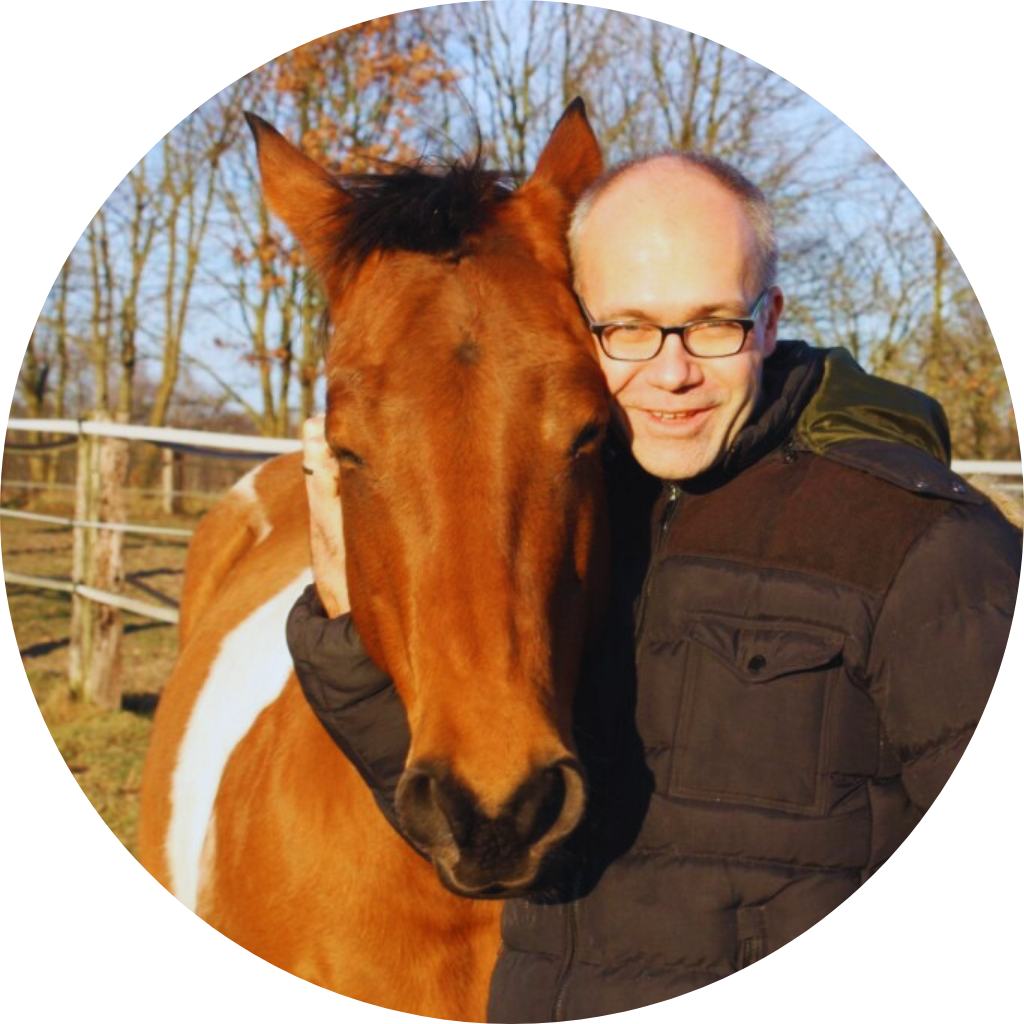
Stefan ide, germany
Stefan Ide is a psychologist and licensed psychotherapist specializing in integrative body psychotherapy, horse-assisted psychotherapy and trauma therapy. Since 2020 he serves as the 1st Chairman of the German Society for Body Psychotherapy (DGK). He is a teaching therapist at the Institute for Body Psychotherapy Berlin (IFK) and a lecturer at Sigmund Freud University Berlin (SFU). Stefan leads the Centro Delfino practice in Berlin Charlottenburg as well as a health insurance-approved practice in Oranienburg. He lives in a small town in Brandenburg, Germany on a horse and cattle farm where he integrates body psychotherapy with animal-assisted psychotherapy, particularly working with horses.
saturday, September 6th | 2:30 PM
Off-site location | 15 min walk each way – plan accordingly
An Introduction to Equine-Assisted Somatic Trauma Therapy
Discover how the powerful synergy of body psychotherapy and equine-assisted therapy can guide you into healing, embodiment, and reconnection with yourself. This workshop introduces equine-assisted somatic trauma therapy—a gentle yet profound approach that integrates neuroscience, somatic wisdom, and the quiet, grounding presence of horses.
Trauma doesn’t only live in memory—it imprints on the nervous system. Horses, with their natural sensitivity to energy and emotion, offer a unique and compassionate mirror. Through their presence, we can regulate our nervous systems, release held patterns, and remember who we are beneath the layers of stress.
In this experiential session, participants will engage in guided practices with horses, exploring nervous system regulation, boundaries, and body-based healing tools. Whether you’re navigating the effects of trauma or seeking a deeper relationship with your own body, this work offers a path toward safety, presence, and resilience.
Horses don’t just reflect our inner state—they help shift it. Healing doesn’t require re-living trauma. It requires a safe space, attuned connection, and the support to come home to yourself.
[IMPORTANT DISCLAIMER] This workshop will take place in an area outside the festival venue. All participants will have to go there on foot (25 minutes each way).
“ Equine-Assisted Somatic Practice: A Relational Approach ”
johanna scherf, germany
Johanna Scherf is a psychodynamic therapist in training with a specialization in body-oriented psychotherapy, equine-assisted therapy, and trauma-focused work. She has experience working with both children and adults and has a particular focus on intercultural psychotherapy and supporting individuals with refugee and migration backgrounds. She currently works in close collaboration with Stefan Ide in Berlin and Brandenburg, combining a psychodynamic approach with body psychotherapy and equine-assisted practice.
saturday, September 6th | 4:30 PM
Off-site location | 15 min walk each way – plan accordingly
In line with the workshop of Stefan Ide, this experiential workshop offers an introduction to equine-assisted somatic therapy —a relational, body-based approach that supports self-awareness, enhances emotional regulation and boundary clarity and a more attuned interpersonal engagement.
Horses respond directly to subtle shifts in human posture, intention, and affect. As sensitive and social beings, they provide immediate, embodied feedback—making visible patterns of communication and relational habits that often remain outside conscious awareness. In structured, non-riding encounters, participants will explore how these interactions can strengthen embodied presence and relational clarity, both personally and professionally.
This work does not involve riding or prior experience with horses. Instead, the focus is on cultivating a felt sense of connection, practicing nervous system regulation, and developing relational clarity through observation, interaction, and reflection. The workshop emphasizes experiential learning, offering a space for reflection and somatic integration.
“Psychodynamic Foundations of Bioenergetic Analysis”
CARSTEN HOLE & JENS TASCHE, GERMANY
Carsten Holle is a certified nurse and holds a degree in Communication Studies from the Berlin University of the Arts. He earned an M.A. in Counselling from the University of Canberra, Australia, as a DAAD scholarship recipient. Since 2009, he has been working at a psychiatric, psychotherapeutic, and psychosomatic care clinic specializing in the treatment of children and adolescents, where he has gained extensive experience in applying and developing body-psychodynamic approaches to this vulnerable and complex patient group. Building on this expertise, he has been leading self-awareness groups for trainee child and adolescent psychotherapists since 2018. As a licensed psychotherapist (Heilpraktiker) and certified TRE® Provider, Carsten also runs a private practice specializing in psychodynamically informed body psychotherapy.
Jens Tasche, a qualified social worker (FH) and Bioenergetic Analyst (CBT), has been working as a body psychotherapist for almost 50 years. After gaining experience as a social therapist in a juvenile detention center and as a research assistant at the Free University of Berlin, he has been working in his own practice since 1986. As a body psychotherapist, supervisor and trainer, he regards modern bioenergetics as a living psychodynamic in which physical-affective experience and psychodynamic based understanding intertwine in a vital, methodologically sound form. He has published numerous specialist articles in which he argues in favor of using the diverse theoretical approaches and schools of psychoanalysis as a scientific frame of reference for bioenergetics.
saturday, September 6th | 11:00 AM
Session 3 | room "GAYATRI" [TRIPURA 1]
Historically, Bioenergetic Analysis has been significantly influenced by Sigmund Freud’s early cathartic drive theory, Wilhelm Reich’s three-stage energetic understanding of healing, and Martin Buber’s philosophical understanding of the I-Thou relationship. In November of last year, the Psychosozial-Verlag published the book ‘Psychodynamic Foundations of Bioenergetic Analysis, which we edited. Beyond the historical roots mentioned above, the authors of this book see the theoretical corpus of contemporary psychoanalysis as the most important reference science for Bioenergetic practice today. Thus, in their essays, the authors address some of the most relevant issues in contemporary bioenergetic and body-oriented therapy. In particular, the categorical model of the distinction between traumatic, conflict-related and deficit-related mental disorders, as well as the findings of psychodynamic developmental psychology, developmental psychopathology and treatment theory are discussed. In this workshop, we would like to present some of the central ideas that emerged in the context of the book. We will be guided by two basic considerations: 1st, the essential task of body psychotherapy is to support clients in being able to affectively and cognitively perceive, tolerate and consciously accept the reality of their past and present. 2nd, (almost) all mental disorders are essentially caused by deficiencies in the regulation of affects and relationships – a finding that is now widely accepted across psychotherapeutic schools. The workshop presents examples of different treatment approaches for the categories of “trauma”, “conflict” and “deficit”, which allow for a differentiated understanding of Bioenergetic body psychotherapy processes. The traditional Reichian concept of ‘liberation’ and Bioenergetic character theory will be complemented by a concept of maturation and healing that is more strongly oriented towards modern psychodynamic models of development and disorder. After a theoretical introduction, the practical part of the workshop will involve trying out and discussing various exercises relevant to each category of disorder:
- Trauma-related exercises for creating a safe space
- Relationship-related exercises to work on pathological attachment patterns
- Conflict-related exercises for activating and analyzing phantasmal-psychic reality (including working with fear of annihilation, loss of mother, loss of mother’s love, and castration anxiety).
- structural exercises to promote the maturation and development of psychic competencies for regulating affect and relationships.
“Dance Therapy Elements for Clients with Lack of
Supportive Experiences in Early Childhood
”
Caroline Blem, Germany
Caroline Biem is a certified dance therapist and trainer BTD (Berufsverband der TanztherapeutInnen Deutschlands), a certified trauma pedagogue DeGPT and a social worker B.A. From 1995 to 1999 she worked in a pedagogic setting with children with developmental disorders. Since 1999 she has worked in a clinical therapeutic setting with adult clients of various psychiatric and psychosomatic diagnosis. For nine years she worked with mothers and children with birth trauma or post- partal depression using elements of the KMP (Kestenberg-Movement-Profile), a special dance-therapy-method which uses e.g. primal natural body rhythms to make contact with the clients and to enhance self-regulation processes. Since 2010 she has specialized in her clinical work and her private praxis on patients with complex PTSD and attachment trauma. Here the KMP is combined with trauma-relevant exercises and with dance-elements from different cultures.
saturday, September 6th | 11:00 aM
Session 3 | room "SUNDARI"
Dance therapy uses dance elements and movement exercises in a creative way to enhance emotional, cognitive and social abilities of human beings of every age and with or without handicaps.
This workshop gives insight into the practical experience of the possibilities of working with easy dance steps and rhythm-elements in groups. The exercises invite one to feel lively and let the body-wisdom work. They offer a chance of being in harmony with oneself and the group members. Dance and rhythm can provide good support to activate resources and the emotional and developmental processes by giving the opportunity to regulate tension, to enhance self-regulation abilities, to enable the experience of the feeling of harmony and to discover new forms of contact and communication.
There is also the possibility to experiment with exercises to enhance psychological boundaries by using rhythm and dance and to try out in a playful way variations of set boundaries in rhythm or dance exercises. Being in an off-beat variation or in a complementary or contrasting movement with a group member can activate self confidence, self awareness and self efficacy.After some practical exercises we share personal experiences of the group members and discuss the possibilities and the relevance in particular for clients with lack of harmonious supportive experience in early childhood.
“Echoes from Within: Exploring the Voice in Body Psychotherapy”
Juliane Müller-Molenar, germany
Born in 1980, Juliane Müller-Molenar has been working with psychiatric outpatients as a social worker for 20 years. In 2010 she began her voice training education in the "Lichtenberger Methode," a specialized approach to working with the voice that focuses primarily on how it resonates within the body rather than solely on vocal exercises. She has been teaching this method ever since. In 2019, she started training at the "Institut für transformative Körperpsychotherapie" in Berlin with Bettina Schröter and Wolfgang Hegenbarth. Body psychotherapy appeared to be the ideal way to integrate her two professions. Currently, she integrates emotional processes into her work with some of her voice students and has begun seeing her first clients in body psychotherapy, focusing on both the body and voice.
saturday, September 6th | 11:00 aM
Session 3 | room "NARYANI" [TRIPURA 3]
Our voice is our most familiar way of expressing ourselves and connecting with others, yet communication is often reduced to its intellectual content. Working with the voice can add a rich and engaging dimension to body psychotherapy methods.
In this workshop, we will explore our voices in various ways, examining how the speaking voice can affect others—whether inviting and calming or stressed and demanding—and working with sounds such as sighing, giggling, yawning, and animal noises to explore their impact on the body and emotions.
We will allow space for silence, investigate where in our bodies we can speak from and where sound can resonate, and explore vocal expressions of emotion alongside their effects on the body. Since the larynx is primarily innervated by the parasympathetic nervous system, we will also consider how working with the voice can induce a state of vivid relaxation or even trance, supporting a deeper connection to the subconscious. Through humming, singing, and creating rhythm together, we will listen not only with our ears but with our whole bodies.
The workshop will include both large group work and smaller exercises in pairs or groups of three.
“Aggression Dialogue Work Using Dialogue-based Confrontation to Develop Aggression as a Resource”
Thomas scheskat, germany
Thomas Scheskat, born in 1956, holds a Master’s degree in Education and has accumulated extensive training and experience in the field of psychotherapy. With over 10 years of specialized training in Biodynamic Body Psychotherapy (Speyer, Boadella, and Boyesen, he is a member of the EABP and holds an ECP certification. In addition, Thomas has been trained in the Hakomi (H. Weiss) and has pursued further studies in various approaches to Body Psychotherapy (W. Büntig and M. Aalberse). His professional development also includes specialized training in therapy for sexual offenders and DBT. With 23 years of leadership experience at a forensic-psychiatric state clinic, Thomas has dedicated the past 30 years to offering aggression balance training for both men and mixed groups. His broad and diverse training, combined with his leadership experience, has made him a well-rounded professional in the field of psychotherapy and therapeutic training.
saturday, September 6th | 11:00 aM
Session 3 | room "SHANTI DEVI"
A healthy attitude to aggression plays a key role for our entire personal development. This must include both the fruitful as well as the harmful aspects of aggression. For the therapeutic access to both sides, we use a pragmatic model of decontaminated aggression on one hand in contrast to a contaminated one on the other hand. We explore this subject in settings of „dialogical confrontations“ by which we`re aiming for the transformation of violence. This means using body- and contact-exercises to distinguish between suppress and channeling one´s own aggressive force supportive to our personality, health, and fairness with others.
Participants of our groups and single work report back often going through a transformative and encouraging process. Therefore, they incorporate the idea of distinction between destructive and constructive aggression in their relationships. It becomes more and more important to take position while balancing one’s own rights, responsibly and the contradiction between consideration and impertinence. It mirrors the political conflict between pacifist and militarily solutions to insure human rights